Implementation in your team Nessie
Implementation in your team
We teach your team to win new clients, and stay until it becomes part of their routine.
The plan is ready: the numbers are worked out and the ideal client profile is written down. But a plan that never makes it into the team’s calendar stays on paper, and new clients are only looked for now and then. The first few weeks are when it’s easiest to lose momentum, before the new way of working becomes a habit.
Implementation with Nessie isn’t a one-off workshop. For 2 months we work side by side with your team and pass on our know-how for winning clients, step by step: market segmentation, LinkedIn and CRM, prospecting and booking quality meetings. We start in week one with real contacts, so you see results while the implementation is still running.
How it works
- a weekly workshop with the whole team, using real messages and contacts
- status meetings and support from a Nessie team lead 3 times a week
- a new stage each week: segmentation, LinkedIn, CRM, prospecting, booking meetings
- after the rollout: optional mentoring, plus AVATAR, an AI tool built on Nessie’s know-how
- the result: a team that wins new clients on its own, and a manager who makes decisions based on the numbers










From a plan on paper to a plan in the calendar.
We don’t just hand over a plan and leave. We work with your team in workshops, status meetings and with a dedicated team lead, using real contacts. We set up lead generation on LinkedIn and in the CRM, and teach the team to run it day to day and manage it by the numbers. By the end, it works without us.
Two roles, two sets of skills.
To get started, we need: a person in charge, the people who will run the process day to day, and access to your CRM, LinkedIn Sales Navigator and a shared inbox.
We work with your team until it all works without us.
One workflow, not two separate tools.
LinkedIn brings the contacts and replies; the CRM makes sure none of them gets lost.
Every contact at the right stage, each with a clear next step.
We set up the pipeline in the CRM you already use, so the team and the manager can see every contact, its stage and next step each week. Here’s what it looks like (with sample data).
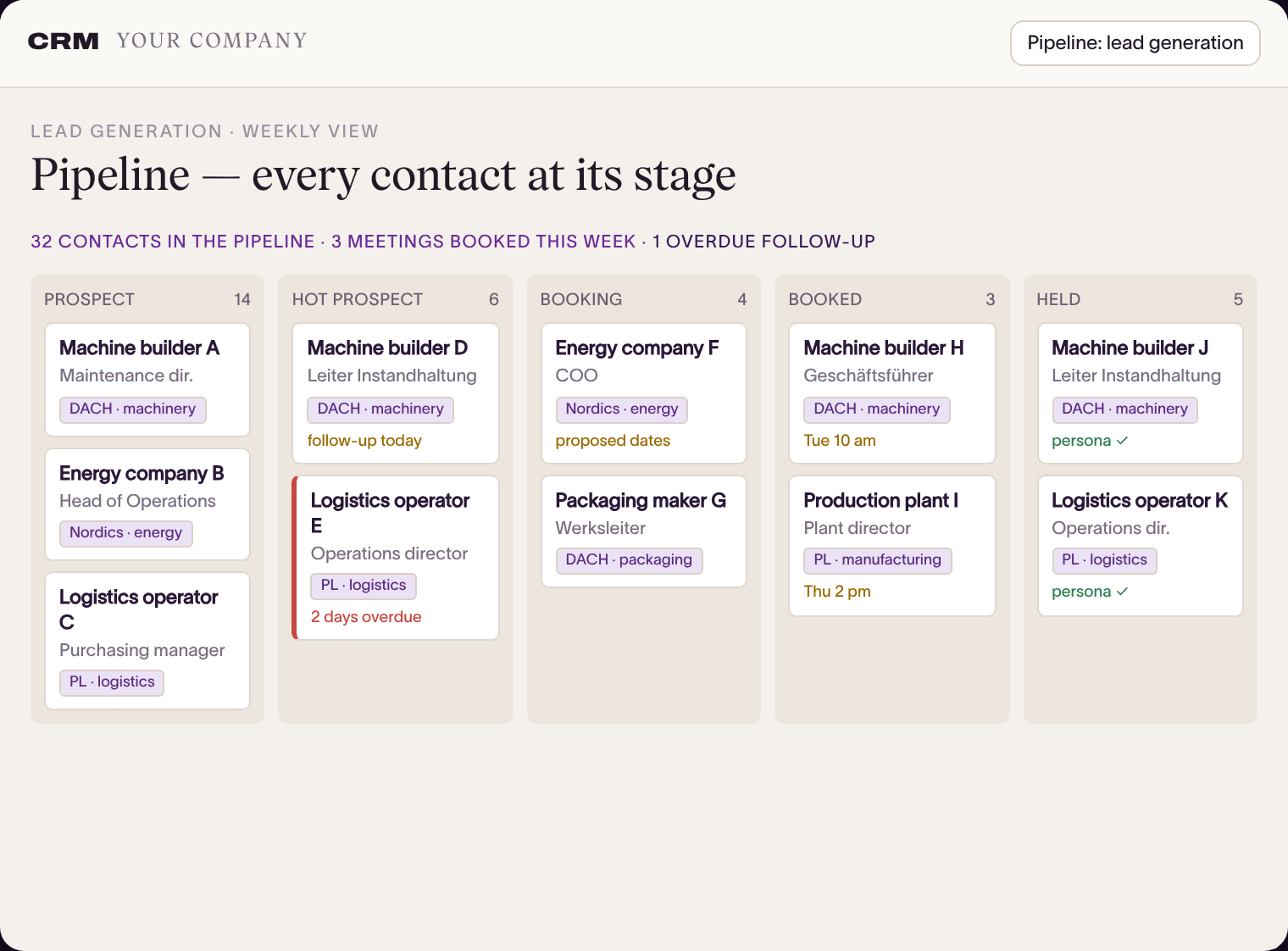
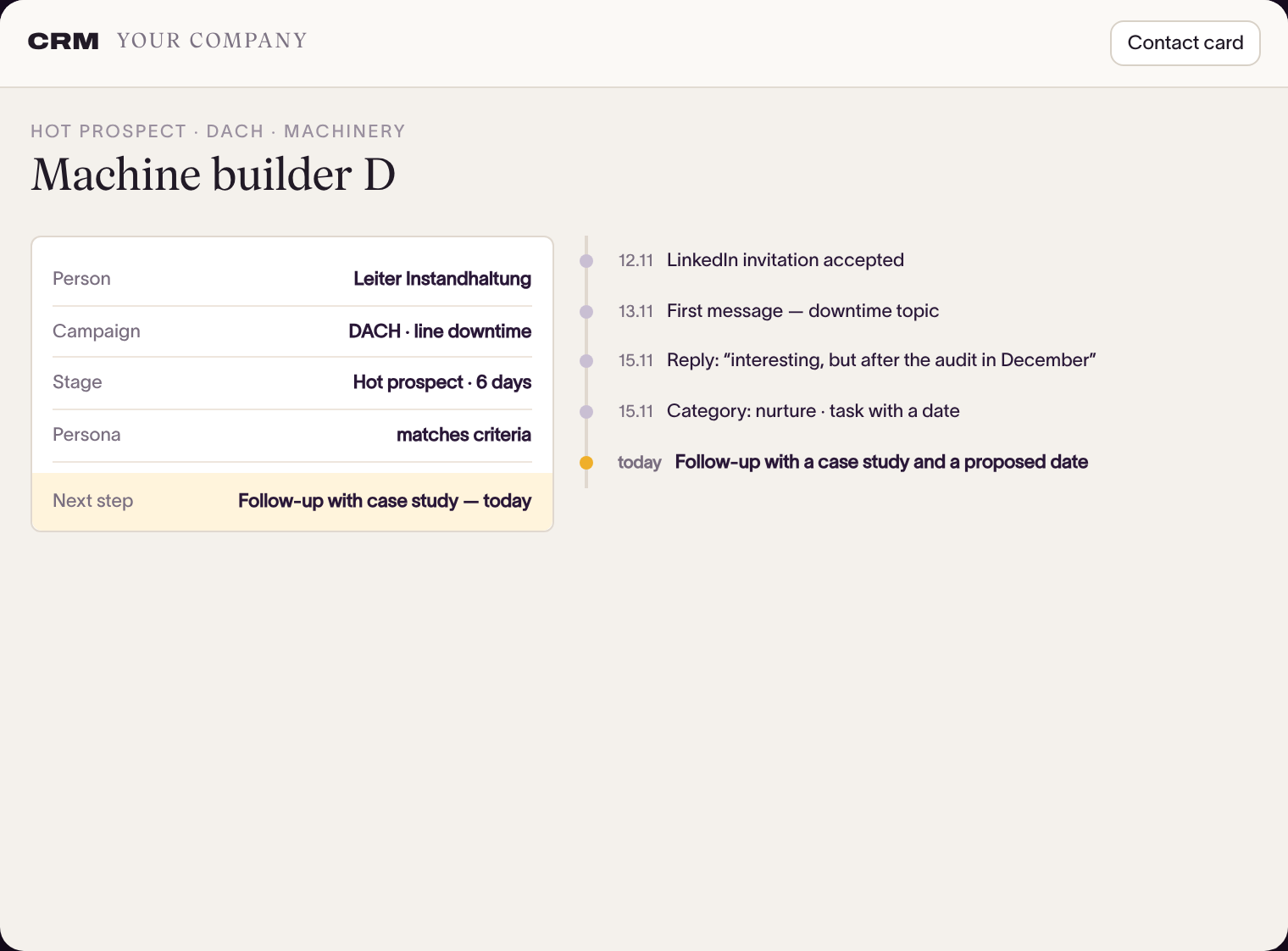
Not theory. Real work on your own messages, contacts and CRM.
This isn't a training course. We check facts, not promises.
Here’s how each 90-minute workshop runs:
Timeline
- Preparation week: kick-off and CRM set-up
- Weeks 1–2 · Set-up: lead generation stages in the CRM, a list of target companies, roles and weekly numbers
- Weeks 3–4 · First contacts and numbers: invitations, messages and booking meetings; we review replies together and adjust as we go
- Weeks 5–6 · Follow-up: a routine for follow-ups and nurturing; the manager learns to read the numbers against benchmarks
- Weeks 7–8 · Independence: the team runs lead generation on its own and the manager makes decisions based on the numbers; a plan for the next quarter
- Optional: mentoring after the rollout, for as many months as you need
An asset, not a cost. Lead generation that works in a normal week.
When it makes sense
- You have the plan and the numbers (after a Sales Scan or building sales with the board) and need to turn them into daily work.
- You want to win new clients with your own team rather than outsource it.
- Contacts live in spreadsheets and inboxes, and the CRM doesn’t show the pipeline.
- A new person in lead generation needs to get up to speed fast, without months of trial and error.
- The team is busy with projects and clients, so the implementation has to be short, regular and focused on what matters most.
The real picture of your sales. More than reports, numbers and declarations.
An in-depth sales audit: two meetings with the board, conversations with the team and analysis of CRM data. At the end, a report and a plan of changes — where to start to see results as fast as possible.
Your revenue target, turned into numbers the board can see and control.
Which segments and clients the revenue will come from, how many enquiries and conversations you need each month, how many people you need and how they should work. We work it out with the board in workshops, using your own data, and we always start with a proper diagnosis.
We take your offer to market for you.
We choose the segments and decision-makers, start the first conversations and keep contacts warm in your CRM. Your team gets meetings with people who have real buying potential, and runs and closes those conversations themselves. You see the numbers every week.